Ealing to Retrofit Over 700 Homes to Improve Energy Performance
Announces programme as government reveals its Warm Homes Plan
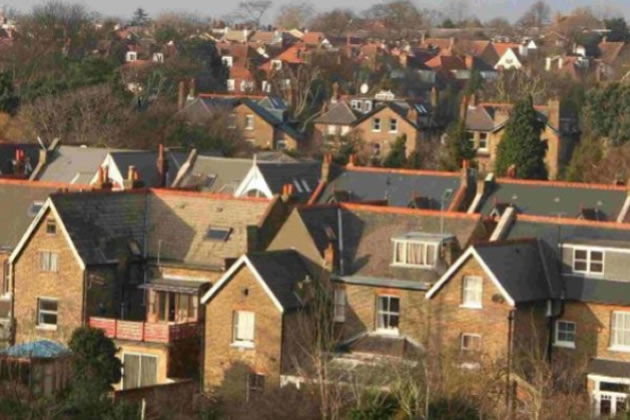
Longer term the council is seeking to significantly boost the use of solar panels. Picture: Ealing Council
January 22, 2026
Ealing Council has announced a large-scale retrofit programme for its residential properties which aims to improve the energy performance of 732 homes by 2028.
The announcement comes as the government revealed its £15 billion Warm Homes Plan — which it is describing as the biggest home-upgrade initiative in British history. The Warm Homes Plan sets out a decade-long pipeline of publicly backed retrofit work across the country, aiming to upgrade up to five million homes with insulation, solar panels, batteries and heat pumps by 2030, while lifting as many as one million families out of fuel poverty.
Ealing’s programme, which includes external wall and loft insulation, new energy-efficient windows and doors, heating upgrades, ventilation systems and roof replacements where needed, mirrors the technologies and priorities highlighted in the national plan. The Government has ringfenced around £5 billion of its funding specifically for low-income and fuel-poor households, offering fully funded upgrade packages depending on the needs of each home. This approach closely reflects Ealing’s own targeting of older, lower-EPC homes, where improvements will have the greatest impact on both carbon emissions and household budgets.
The national plan also introduces a universal offer for all households, including zero- and low-interest loans for solar panels, batteries and heat pumps, and a £7,500 grant for heat pumps through an extended Boiler Upgrade Scheme. These measures reinforce the direction Ealing is already taking by preparing its homes for future low-carbon technologies such as heat pumps and solar power.
The Warm Homes Plan also introduces new protections for renters, requiring landlords to invest in energy-saving upgrades and ensuring that private and social homes are “safe, warm and affordable.” This dovetails with Ealing’s wider housing strategy, which includes stronger protections for private renters, expanded licensing schemes and planning measures to curb overcrowded HMO conversions.
Funding for Ealing’s current retrofit phase comes partly from the Government’s Warm Homes: Social Housing Fund, with almost £6.5 million awarded through the London Councils partnership, alongside more than £35.5 million that the council has committed over three years. The new national plan strengthens this funding environment by promising long-term stability for contractors, installers and suppliers, giving councils greater confidence to scale up their programmes.
Since May 2022, Ealing has already upgraded more than 1,200 homes with improved insulation, ventilation and modern heating systems, and the council expects the new phase to save more than 500 tonnes of carbon dioxide and around 230,000 kilowatt-hours of energy each month. These local achievements now contribute directly to the national ambition to reduce long-term energy costs and expand clean-energy technologies across the country. The Government’s plan aims to triple the number of homes with solar panels by 2030, and to ensure that every new home is built with solar panels as standard.
The Warm Homes Plan also emphasises the need for whole-street or whole-estate upgrades in social housing, recognising the efficiencies and community benefits of delivering improvements at scale. Ealing’s programme, which is already delivering coordinated upgrades across multiple estates, fits neatly into this model and positions the borough to benefit from future rounds of national investment.
Councillor Louise Brett, the council’s cabinet member for safe and genuinely affordable homes, has highlighted the immediate benefits for residents — warmer homes, lower bills, reduced damp and mould, and improved comfort.
Like Reading Articles Like This? Help Us Produce More This site remains committed to providing local community news and public interest journalism. Articles such as the one above are integral to what we do. We aim to feature as much as possible on local societies, charities based in the area, fundraising efforts by residents, community-based initiatives and even helping people find missing pets. We've always done that and won't be changing, in fact we'd like to do more. However, the readership that these stories generates is often below that needed to cover the cost of producing them. Our financial resources are limited and the local media environment is intensely competitive so there is a constraint on what we can do. We are therefore asking our readers to consider offering financial support to these efforts. Any money given will help support community and public interest news and the expansion of our coverage in this area. A suggested monthly payment is £8 but we would be grateful for any amount for instance if you think this site offers the equivalent value of a subscription to a daily printed newspaper you may wish to consider £20 per month. If neither of these amounts is suitable for you then contact info@neighbournet.com and we can set up an alternative. All payments are made through a secure web site. One-off donations are also appreciated. Choose The Amount You Wish To Contribute. If you do support us in this way we'd be interested to hear what kind of articles you would like to see more of on the site – send your suggestions to the editor. For businesses we offer the chance to be a corporate sponsor of community content on the site. For £30 plus VAT per month you will be the designated sponsor of at least one article a month with your logo appearing if supplied. If there is a specific community group or initiative you'd like to support we can make sure your sponsorship is featured on related content for a one off payment of £50 plus VAT. All payments are made through a secure web site. |